Pain Corporation of India
January 12, 2026 to February 23, 2026
Gallery Sumukha
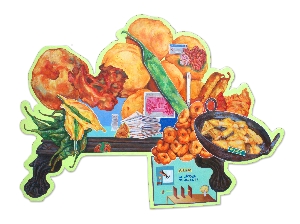
Stacked narratives: Pakoda Republic and assorted applications Bharathesh G D
Acrylic on Linen canvas
2025
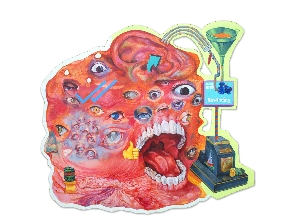
Stacked narratives: Louder than silence: This shall pass tooBharathesh G D
Acrylic On Canvas
2025
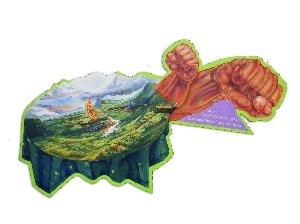
Stacked narratives: Not much of a crowd puller, Isn't it?Bharathesh G D
Oil, Acrylic Lead on Canvas
2025
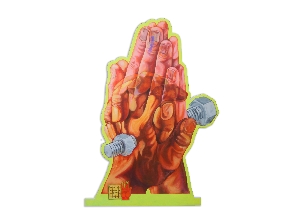
Stacked narratives: Fold, folded, fooledBharathesh G D
Acrylic & Sand On Canvas
2025
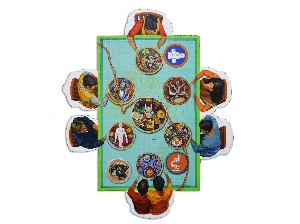
Stacked narratives: Curated curiosities of prompted plates Bharathesh G D
Fiberglass, gold leaf, painted with enamel colors & laminated with melamine
2025
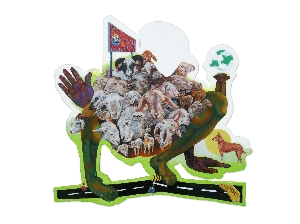
Stacked narratives: IN and AS, Encrypted forwards Bharathesh G D
Resin sculpture framed in a box
2024
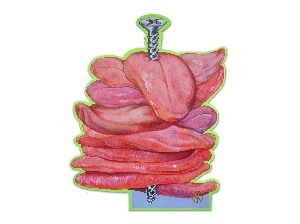
Stacked narratives: I just said it, to I told you so. Bharathesh G D
Graphite with charcoal on paper
2020
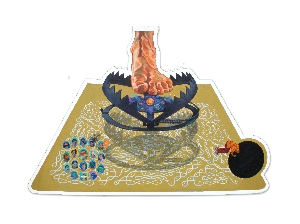
Stacked narratives: Heard you had Head!Bharathesh G D
Copper with black cold patina (Script: Tigalari)
2025
How do images of divinity, democracy, and authority circulate, collide, and enact symbolic violence?
In Pain Corporation of India, Bharathesh G D examines these questions through a series of ideas/works that function as meaning-making machines—only to turn against themselves. The works expose how belief is engineered, pain normalised, and dissent absorbed, deferred, and managed within visual culture.
This project does not operate in the register of nostalgia. It begins with a refusal. Rather than offering solace or resolution, the works mimic the visual systems they seek to dismantle—borrowing their scale, materials, and repetitive logic to generate friction instead of affirmation. Images fracture rather than reassure. Meaning is not delivered; it is interrupted. What emerges is a visual grammar of interruption, where symbols refuse to settle, and perception is kept deliberately unstable.
Shaped by decades of accumulated pain—socially produced, politically administered, and collectively endured under the promise of democracy—this body of work reflects a condition of mass anguish and helplessness. Here, dissent survives only through indirect speech: metaphor, sign, code. Multiple voices echo, trapped within the factory of images—an apparatus of visual production that endlessly manufactures meaning, flattens complexity, and converts plural realities into singular opinions.
Pain Corporation of India reveals democracy not as an absence, but as an infrastructure: operational, procedural, and capable of sustaining suffering while appearing functional. The works insist on looking at pain not as an exception, but as a product—systematically generated, circulated, and consumed.